

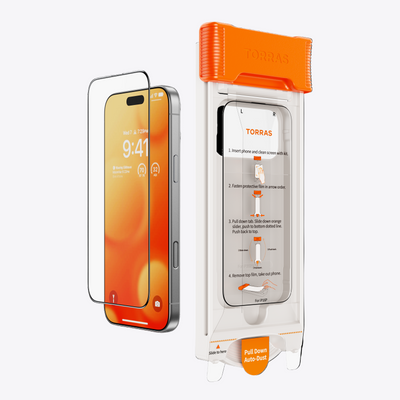


Sunlight doesn't just make your iPhone screen hard to read. It exposes exactly how much light your display reflects back at you instead of through to your eyes. The right screen protector with proper optical technology fixes that at the source, not just by cranking up brightness. Here's what causes glare, how the different solutions actually work, and which one fits your daily life.
Why iPhone Screens Are Hard to See in Sunlight and What Causes Screen Glare
Sunlight hits your iPhone screen and bounces straight back at your eyes. That's the core of the problem, and it comes down to basic physics.
iPhone displays use smooth, highly polished glass. That surface is excellent for color accuracy and touch sensitivity, but it behaves like a mirror when light hits it at the right angle. Instead of letting all the light pass through from the display, a portion reflects off the outer surface and creates screen glare.
A few factors make this worse outdoors:
- Ambient light intensity. Direct sunlight is far brighter than indoor lighting, so reflected light is also far more intense.
- Light angle. Sunlight can strike your screen from multiple directions at once, especially when you're moving or sitting outside.
- Screen brightness limits. Even at maximum brightness, your display competes with reflected light it can't fully overpower.
A screen protector without optical coating can add to the problem. The smooth uncoated glass surface creates an additional layer of reflection on top of the display, making glare harder to manage rather than easier.he type of screen protector you choose matters more than most people realize.

The Difference Between Anti-Glare and Anti-Reflective Screen Protector Technology
Both terms get used interchangeably, but they describe two distinct approaches to the same problem. Knowing the difference helps you choose the right screen protector for your situation.
An anti-glare screen protector works by scattering incoming light. The surface has a fine matte texture that diffuses light in multiple directions rather than letting it reflect cleanly back at your eyes. This reduces the harshness of glare, especially in bright outdoor conditions. The trade-off is that this scattering effect can slightly soften fine image detail up close.
An anti-reflective screen protector takes a different approach. Instead of scattering light, it uses optical coatings to cancel out reflected light waves at the surface level through a process called destructive interference, where reflected light waves cancel each other out before reaching your eyes. The result is a screen that stays sharp and clear while reflecting significantly less light than uncoated glass.
Here's a quick comparison of the two technologies.
| Feature | Anti-Glare Screen Protector | Anti-Reflective Screen Protector |
|---|---|---|
| How it works | Scatters light via matte texture | Cancels reflected light via optical coating |
| Image clarity | Slightly softened | High clarity maintained |
| Best for | Harsh outdoor environments | Everyday use with strong lighting |
| Surface feel | Matte, slightly textured | Smooth, glass-like |
Both options reduce glare, but they suit different priorities and use cases.

How AR Nano-Coating Works to Reduce Reflectivity on a Screen Protector
AR (anti-reflective) nano-coating is an ultra-thin optical layer applied to the surface of a screen protector at a microscopic scale. "Nano" describes the thickness of the coating, measured in nanometers (one nanometer equals one billionth of a meter). This precision is what makes the technology effective.
The coating works through thin-film interference, an optical principle where light waves reflecting off the top and bottom of the coating are slightly out of phase and cancel each other out. The more precisely the coating thickness is calibrated, the more reflection it eliminates across the visible light spectrum.
What This Means in Practice
A standard uncoated glass screen protector typically reflects around 4% to 5% of incoming light. That might sound small, but in bright sunlight it creates a visible and distracting mirror effect on your display. A well-engineered AR nano-coating can bring reflectivity down to below 1%, which translates directly to a more readable screen in real-world conditions.
Less reflected light also means more light from the display reaches your eyes. This is measured as light transmittance, the percentage of display light that passes through the protector. Higher transmittance means the screen looks brighter and more color-accurate without requiring higher brightness settings.
Why Coating Quality Matters
Not all AR coatings perform equally. A well-calibrated coating reduces reflection across the full range of visible wavelengths, preserving color accuracy. A well-calibrated coating reduces reflection evenly across the visible light spectrum, keeping colors accurate and the display looking natural. The precision of the manufacturing process is what separates effective AR coatings from less consistent ones.
This is why the quality of AR nano-coating varies considerably between screen protectors, even when products use the same general technology on the label.

Who Benefits Most From an Anti-Reflective Screen Protector in Daily Life
An anti-reflective screen protector improves the experience for almost any iPhone user who spends time in lit environments. That covers most people, most of the time. A few groups notice the difference more than others though.
- Outdoor commuters and walkers constantly deal with shifting sunlight angles. AR coating reduces the need to squint or reposition the phone to find a readable angle.
- People who work near windows face a steady glare source. Natural light is great for a workspace, but it makes phone screens harder to read without repositioning constantly.
- Drivers using a phone for navigation deal with sunlight through the windshield hitting the screen directly. Less reflectivity means faster, easier glance-checks.
- Content creators and photographers reviewing images outdoors benefit from more accurate color representation on screen, since reduced reflection means what they see is closer to the actual image.
- Anyone prone to eye strain will notice the difference across a full day. Constantly adjusting to bright reflections causes visual fatigue. A screen protector that handles reflectivity lowers the effort required just to read your phone.
Make Every Screen Moment Count
Glare is a solvable problem. An anti-reflective screen protector works at the optical level to reduce reflection, improve transmittance, and make your display genuinely easier to read in any lighting condition. If you spend time outdoors, near windows, or just want your iPhone screen to look its best without maxing out brightness, upgrading your screen protector is one of the simplest changes with the most consistent daily payoff.
FAQs
Q1. Is an Anti-Glare Screen Protector the Same as Matte?
Not exactly. Matte refers to the surface finish, which uses a textured coating to scatter light and reduce glare. Anti-glare is the broader function that matte finishes help achieve. An anti-reflective screen protector, by contrast, uses optical nano-coating rather than a matte texture to cancel reflected light waves, which means it reduces glare while keeping the display sharp and clear. The two approaches solve the same problem through different methods.
Q2. Are Anti-Glare Screens Good for Your Eyes?
Yes, in practical terms. When your screen reflects ambient light, your eyes constantly adjust between the reflected brightness and the display content, which causes visual fatigue over time. A screen protector that reduces surface reflection lowers that adjustment demand, making it easier to read your screen for longer periods without discomfort. It does not block harmful light wavelengths on its own, but reducing glare is a meaningful step toward a more comfortable daily viewing experience.
Q3. Does an Anti-Glare Screen Protector Affect How Bright the Display Looks?
It depends on the technology. Matte anti-glare coatings scatter light, which can slightly soften perceived brightness in low-light settings. Anti-reflective coatings work differently: by reducing the reflected light competing with your display, they can make the screen appear more vivid and readable in bright environments without changing the display output itself. For most everyday use, a quality anti-reflective screen protector makes the display feel brighter and cleaner, not dimmer.
Q4. Does Screen Glare Damage Your Eyes Over Time?
Glare itself does not cause permanent eye damage, but it does contribute to asthenopia (eye fatigue from sustained visual effort). When your eyes work overtime to compensate for bright reflections on your screen, they tire faster and may feel strained after extended use. Reducing glare with an anti-glare or anti-reflective screen protector is one of the simplest ways to lower that daily visual load.

 New
New


TORRAS Bot
The TORRAS Pebble Power Bank offers a balanced combination of portability, design quality, and dependable charging performance. Its unique pebble-inspired shape distinguishes it from traditional power banks while improving everyday usability.