
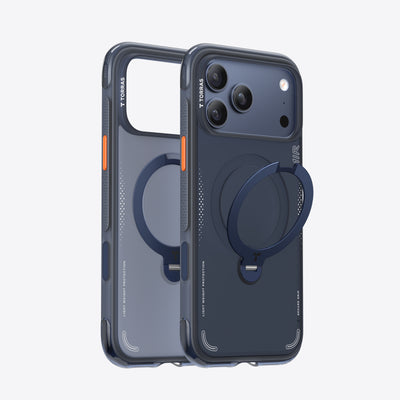



"Shockproof" appears on countless phone case listings, but the label alone doesn't tell you much. A shockproof phone case and a basic protective case can look identical on the outside while performing very differently under impact. Before buying based on a single word, it's worth knowing what the engineering actually involves, where it matters most, and how to tell whether a product backs up the claim with real testing.
What Shockproof Actually Means in Phone Case Engineering
Shockproof doesn't mean indestructible. It means the case is engineered to absorb and redirect impact energy before it reaches the phone. When a phone hits a hard surface, force travels through whatever material sits between the phone and that surface. A shockproof case interrupts that transfer using two core structural elements:
- TPU bumpers: TPU (thermoplastic polyurethane, a flexible shock-absorbing polymer) lines the edges and corners where impact energy concentrates. It deforms slightly on contact to absorb force, then returns to shape.
- Air cushion corner technology: Hollow pockets built into the case corners that compress like a crumple zone on impact, dispersing peak force before it reaches the phone frame.
The combination of these two elements is what separates a genuinely shockproof design from one that simply uses the word as a label.

Shockproof vs Drop-Proof in a Phone Case
These two terms get used interchangeably, but they describe different levels of protection. The table below breaks down the key differences.
| Feature | Shockproof | Drop-Proof |
| Protection scope | Multi-directional: drops, collisions, compression, vibration | Primarily vertical falls from a tested height |
| Test conditions | Broader range of impact types and angles | Controlled lab drop onto flat surface |
| Real-world coverage | Active environments with varied impact risks | Optimized for clean vertical drops |
| Certification standard | Often linked to MIL-STD-810G testing | May or may not reference a standard |
Neither claim means unlimited protection. Knowing which one applies to a case helps set accurate expectations for how it will perform in actual use.
When a Shockproof Phone Case Actually Matters
Shockproof performance earns its value in specific situations where standard cases fall short. The three environments below represent the clearest cases for upgrading protection.
Live Sports Events and Stadium Environments
Stadiums and fan zones are high-impact environments in ways that go beyond obvious drops. Phones get passed around for photos, knocked against metal railings in celebration, pressed against hard surfaces in dense crowds, and set down on concrete bleachers throughout the event. Any one of these moments can generate the kind of impact that reaches the phone frame without proper corner and edge protection.
A rugged phone case with certified shockproof construction handles this range of contact scenarios, not just a single clean drop onto flat ground.
Outdoor Activities and Unpredictable Terrain
Hiking, cycling, running, and traveling all put phones in situations where drops happen onto irregular and unforgiving surfaces. Gravel, rock, asphalt, and wet pavement generate more damage per drop than smooth indoor floors because the contact surface concentrates force rather than distributing it.
Shockproof cases with reinforced corners and raised lips on both the camera and screen side provide protection that accounts for these surface variables.
Everyday High-Risk Moments You Might Not Think About
The majority of phone drops don't happen during dramatic events. They happen during routine moments: pulling the phone out of a pocket at the wrong angle, setting it on a sloped surface, or losing grip while reading in bed. These everyday drops are lower-impact but far more frequent, and the cumulative effect on an unprotected phone frame adds up.
A shockproof case provides consistent baseline protection across all of these moments, not just the obvious high-risk ones.

How Air-Cushion Technology Works in a Shockproof Phone Case
Air cushion technology is the most effective structural solution for corner and edge impact absorption. Here is how it works and why it matters:
- Corners take the most damage: The corners of a phone absorb the majority of impact energy in most drop scenarios, making them the highest-priority area for protection
- Hollow pocket design: Air cushion corners contain hollow pockets inside the case material that compress on impact, acting like a microscale crumple zone
- Energy dispersal: The compression absorbs peak force and slows the energy transfer rate before it reaches the phone frame, resulting in lower stress on the chassis and screen
- Returns to shape: Unlike solid materials that transfer force directly, the air pocket structure recovers after impact and maintains protective function across repeated drops
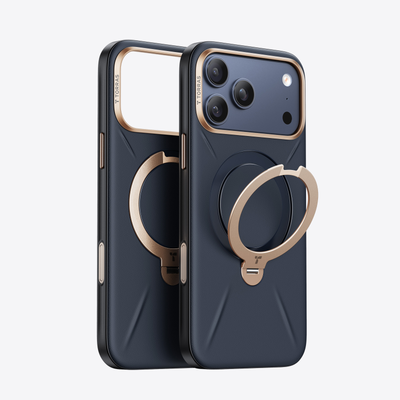
This technology is built into the Ostand Q3 Air series, which combines air cushion corner protection with a slim profile and a 360-degree rotatable stand tested to over 30,000 open-and-close cycles. For fans looking for a football limited edition that brings match day design and practical drop protection together, this series covers both in one case.
How to Tell if a Shockproof Phone Case Has Been Properly Tested
The word "shockproof" on a product page is not a certification. Knowing how to verify the claim separates reliable protection from a label.
The most widely recognized benchmark is MIL-STD-810G (a durability testing standard developed by the U.S. Department of Defense that assesses products against drop impact, temperature stress, and other physical conditions). A case that carries this certification has been tested against a defined protocol, not just described as tough.
When evaluating the best iPhone cases for protection, look for:
- Explicit MIL-STD-810G certification mentioned in product specs, not just the marketing description
- Clear material callouts for TPU corners or air cushion technology
- Drop height ratings that specify the test surface and angle, not just a headline number
- Independent or third-party test references where available
A case that provides specific testing details is far more trustworthy than one that uses "shockproof" as a general descriptor. The more specific the claim, the more verifiable it is.

Choose Protection That Actually Backs Up the Claim
A shockproof phone case is more than a label. It's a specific set of engineering choices that determines whether your phone survives the drops, collisions, and impacts that happen in real daily use. Knowing what to look for, including air cushion corner construction, material quality, and verified testing details, puts you in a position to choose protection that actually performs. Find a case that matches your environment and holds up when it counts.
FAQs
Q1. Is a Shockproof Phone Case the Same as a Waterproof Case?
No, these are entirely separate protection categories. A shockproof phone case is engineered to absorb and disperse impact energy from drops and collisions. Waterproofing requires a sealed construction that prevents liquid from entering the device, which is a different engineering challenge. Some cases combine both features, but shockproof alone does not imply any water resistance.
Q2. Can a Shockproof Phone Case Protect Against Screen Cracks?
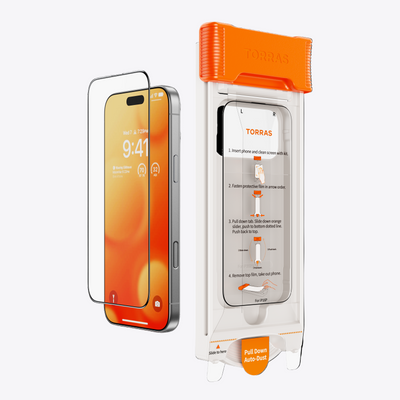
A shockproof case significantly reduces the force transmitted to the phone frame and screen during a drop, which lowers the risk of cracking. However, no case eliminates crack risk entirely, since screen damage depends on drop height, surface hardness, and impact angle. A case with a raised front bezel that keeps the screen elevated off the surface on contact adds an additional layer of screen protection alongside the shockproof construction.
Q3. Does a Shockproof Case Add a Lot of Bulk to the Phone?
Modern shockproof cases use material engineering advances that deliver certified impact protection in a slim profile. Air cushion corner technology and high-grade TPU bumpers provide effective shock absorption in a slim profile, without adding unnecessary bulk to the phone. Bulk is a design variable, not a requirement for genuine shockproof performance.
Q4. How Long Does a Shockproof Phone Case Stay Effective?
The shock-absorbing properties of TPU and air cushion materials can gradually change over time with repeated impacts and exposure to heat and UV light. After significant use, it is worth inspecting the case periodically for visible deformation, cracks, or a loose fit to ensure the protection level remains reliable. Inspecting the case periodically for visible deformation, cracks, or a loose fit helps ensure the protection level stays reliable over time.

 New
New


TORRAS Bot
The TORRAS Pebble Power Bank offers a balanced combination of portability, design quality, and dependable charging performance. Its unique pebble-inspired shape distinguishes it from traditional power banks while improving everyday usability.