

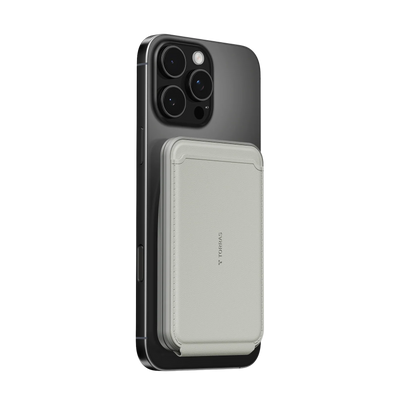


Most people do not think about their charging setup until their phone hits 10 percent at the worst possible moment. A wireless power bank changes that equation entirely by giving you a backup battery that works without cables, snaps onto your phone magnetically, and fits in a jacket pocket. Here is why this category of charger has become the one most people reach for first.
What Makes a Wireless Power Bank Different From a Regular Power Bank
A regular power bank charges your phone through a cable. A wireless power bank does the same thing and adds one more option: charging without any cable between the bank and your phone. That one difference changes how you use it every day.
The Cable-Free Charging Technology Behind It
Wireless output uses electromagnetic induction, a process explained in detail by the Wireless Power Consortium, where electrical current in the bank's coil creates a magnetic field that transfers energy directly to a receiver coil inside your phone. No port needed on either side. The phone charges as long as it stays in contact with the bank's surface.
Why Magnetic Attachment Makes It More Reliable
Standard wireless charging without magnets requires precise positioning. If the coils are slightly off, charging slows or stops. Magnetic alignment pulls the phone and bank into the correct position automatically, so charging runs at full speed every time without any adjustment. For travel, especially, this matters because the connection stays secure through movement, bumps, and bag jostling throughout the day.

How a Wireless Charging Power Bank Covers Your Three Biggest Charging Scenarios
A wireless charging power bank is not a single-use accessory. The same device handles three genuinely different charging situations that come up regularly for most people, and it handles all three without swapping gear.
Travel: Staying Charged Between Outlets
Airports, long flights, and full travel days create stretches of four to eight hours or more without reliable outlet access. A wireless power bank with 10,000 mAh, where mAh stands for milliampere-hours and measures how much charge the battery can store, can fully recharge most modern smartphones two to two and a half times on a single fill. That covers a full travel day with room to spare.
The wireless output is particularly useful in transit. Snapping the bank onto the back of the phone while navigating an airport or sitting on a train means charging happens hands-free without a cable dangling between devices. When you need to put the phone away, the bank detaches in a second.
Work: Keeping Your Phone Ready Through Back-to-Back Meetings
A full day of calls, navigation, and content creation drains a phone battery faster than office use. A slim wireless power bank that sits flat in a bag pocket gives you a backup that adds no meaningful weight to a work bag and requires no setup when you need it.
The wired USB-C output on most wireless power banks delivers significantly faster charging than the wireless side, typically 20W to 30W, which stands for watts and measures the rate of power delivery. When you have thirty minutes before the next meeting and need a fast top-up, plugging in via USB-C gets the job done quickly. The wireless output handles slower, more casual charging between sessions.
Emergencies: When an Outlet Is Not an Option
Power outages, travel delays, outdoor events, and dead car batteries all create situations where a wall outlet simply is not available. A fully charged wireless power bank sitting in a bag or glove compartment covers most of these scenarios without requiring any planning beyond keeping the bank charged.
For true emergencies, the phone is the most critical device to keep alive. A power bank that charges it wirelessly without requiring you to locate a cable in a stressful situation removes one step from the process when every step matters.
For all three scenarios, look for a wireless power bank with at least 10,000 mAh capacity, 30W wired output, 15W wireless output, and a magnetic attachment rated at enough force to stay secure during movement. A slim profile under 15mm and a weight under 200g makes it practical to carry daily rather than only packing it for specific trips.

What to Look for in a Travel Power Bank With Wireless Charging
Choosing the right wireless charging power bank comes down to matching the specs to how you actually use it. The table below gives a practical breakdown of the key specs and what each one means for real-world use.
|
Spec |
What to Look For |
Why It Matters |
|
Capacity |
10,000 mAh for most users |
Covers 2 to 2.5 full phone charges |
|
Wired output |
30W or higher via USB-C |
Fast top-ups when speed matters |
|
Wireless output |
15W for MagSafe-compatible iPhones |
Full-speed wireless charging hands-free |
|
Magnetic force |
Strong enough to hold during movement |
Keeps connection secure on the go |
|
Size and weight |
Under 15mm thick, under 200g |
Comfortable for daily carry |
|
Battery technology |
Semi-solid state or equivalent |
Improved safety and thermal stability |
The right combination of these specs handles daily carry, travel, and emergencies without requiring a separate device for each use case.
Simple Habits That Help You Get the Most Out of a Wireless Power Bank
The best wireless power bank is one you actually use consistently. A few habits make that easier:
- Charge it every night alongside your phone. A power bank that starts the day full is always ready. Treat it like a daily essential rather than emergency gear.
- Keep it in the same spot in your bag every time. Consistent placement means you can find it quickly when you need it without digging through everything else.
- Use wired output for fast charges and wireless for passive top-ups. When time is short, plug in. When you are moving around or just want to maintain battery level, snap it on wirelessly.
- Check the charge level once a week if you are not using it daily. Power banks self-discharge slowly over time. A quick check prevents the frustrating moment of reaching for backup power and finding it empty.
Stop Running Out of Battery When It Matters Most
A wireless power bank is not just a backup battery. It is the charging setup that works in every situation without requiring you to plan ahead or carry extra cables. Whether the scenario is a long flight, a packed workday, or an unexpected situation without outlets, one device handles all of it. Find a wireless charging power bank that fits your daily carry and stop thinking about battery life.
FAQs
Q1. How Fast Does a Wireless Power Bank Charge Compared to Wired?
Wireless output from a power bank typically delivers 10W to 15W, depending on the device and compatibility, while wired USB-C output on the same bank can reach 20W to 30W or higher. Wired charging is faster when speed is the priority, but wireless output is more convenient for passive charging during movement or hands-free use. Many users combine both depending on the situation.
Q2. Can a Wireless Power Bank Charge an Android Phone Wirelessly?
Yes, most wireless power banks charge any phone that supports the Qi wireless charging standard, which is the universal wireless charging protocol used by the majority of Android phones and all recent iPhones. Magnetic attachment features are specifically designed for MagSafe-compatible iPhones, but the wireless charging surface itself works with any Qi-compatible device regardless of brand.
Q3. How Many Times Can a 10,000 mAh Wireless Power Bank Charge My Phone?
A 10,000 mAh power bank can typically recharge a modern smartphone two to two and a half times, depending on the phone's battery size and whether charging happens wirelessly or via cable. Wireless charging is slightly less efficient than wired due to energy lost as heat during the transfer process, so wired output delivers slightly more total charges per fill. For most users, 10,000 mAh covers a full travel day or weekend trip comfortably.
Q4. Is It Safe to Use a Wireless Power Bank While Charging It?
Pass-through charging, which refers to using a power bank to charge a device while the bank itself is being recharged from a wall outlet, is supported by many wireless power banks. Most modern banks include protections against overheating, over-voltage, and over-current that keep both devices safe during simultaneous charging. Check the product specifications to confirm pass-through support before relying on it during travel or time-sensitive situations.

 New
New


TORRAS Bot
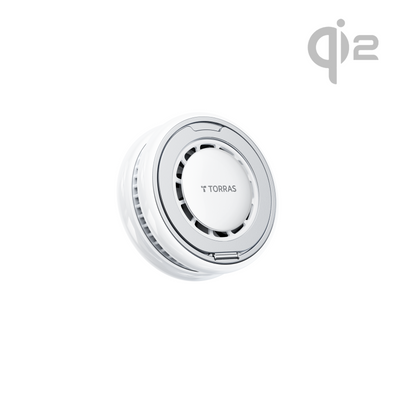
The TORRAS Pebble Power Bank offers a balanced combination of portability, design quality, and dependable charging performance. Its unique pebble-inspired shape distinguishes it from traditional power banks while improving everyday usability.