

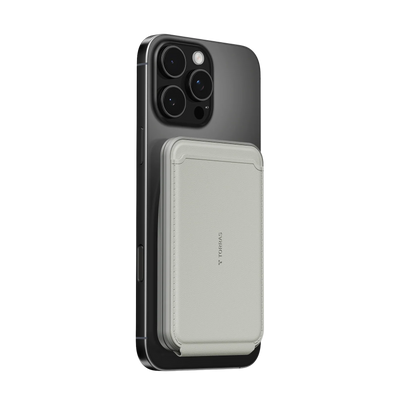


Qi2 wireless charging is the shift from legacy Qi into a more tightly certified system built around magnetic alignment, interoperability testing, and stricter claim control. If you need to approve a charger, case, or supplier claim, the key question is not whether it snaps on cleanly, but whether the exact configuration is certified and documented.

What Qi2 Certification Changes From Legacy Qi
Qi2 wireless charging changes the decision from "does it charge?" to "is this exact setup certified to do what it claims?" The Wireless Power Consortium says Qi certification depends on compliance testing at an Authorized Test Lab, interoperability testing at an Interoperability Center, and the product owner being a WPC member in good standing. Move to the Qi Certification Process for the full steps.
That matters because legacy Qi products can still be legitimate wireless chargers, while Qi2 adds the Magnetic Power Profile and a tighter certification path. WPC's Qi standards page distinguishes Qi2's magnetic attachment from non-magnetic EPP/BPP products, which still sit under the Qi umbrella but are not the same thing as Qi2. See the Qi Wireless Charging Standards overview.
A useful rule: if a seller leans on a magnetic snap or a MagSafe-style look, that is only a starting clue. It does not prove Qi2 certification, and it should not be treated as a substitute for a database match or certificate record.
For readers who want the basic Qi background first, What Is Qi Wireless Charging is the cleaner primer.
Magnetic Alignment and Interoperability
For most teams, Qi2's magnetic layer is valuable because it reduces placement guesswork. That matters in the real world: one-handed placement on a desk, quick top-ups in a car mount, and pocket-to-desk daily use are all easier when the phone seats in the same spot every time.
The practical difference is repeatability. With a flat pad, a small placement error can mean slower charging, more heat, or a frustrating "it was charging, then it wasn't" moment. Qi2's alignment approach is meant to make that less likely, but the certification question is still whether the tested build behaves consistently, not whether the marketing render looks magnetically aligned.

Accessory makers should check the full stack: device back, case thickness, magnet layout, and any mount or stand that changes the contact geometry. If the case or accessory changes the way the phone sits, the product may still be a good fit for a user, but it should not be described as certified without matching test evidence.
A reasonable decision sentence: if a charger is meant for frequent pick-up-and-go use, Qi2-style alignment is usually the safer fit; if the product will sit untouched overnight, the convenience gap is smaller and legacy Qi may still be enough.
If you need a quick consumer-facing contrast, MagSafe vs Standard Wireless Charging: What Is Actually Different is a useful follow-up, but the compliance takeaway stays the same: appearance is not proof.
Foreign Object Detection and Safety Testing
Foreign object detection, or FOD, is the part of wireless charging that tries to catch coins, keys, rings, or other metal objects before they waste power or create avoidable heat. In everyday use, the risk shows up on cluttered desks, in purses and backpacks, and in car interiors where small metal items tend to collect.
WPC's Qi v1.3 introduction describes Qi2 FOD as a mix of pre-power methods, including Q-factor and resonance change checks, and in-power methods that account for power loss during operation. In plain English, that means the charger is expected to look for abnormal behavior before and during charging, not just after something has already heated up. See the Qi v1.3 Introduction.
That is important for compliance reviews because "FOD is included" is too vague to be useful. A real review packet should show what was tested, which setup was used, and what the pass/fail outcome was. If that trail is missing, the claim may still sound plausible, but it is weak evidence for procurement or certification sign-off.
Another practical decision sentence: if a charger will live in a bag, on a shared desk, or in a car, FOD quality matters more than it does for a neat bedside setup; if the environment is clean and controlled, the margin for a weak implementation is slightly less visible, but still not something to ignore.
Qi2 Certification Metrics That Matter Most
The table below keeps the discussion at the level that matters for launch and supplier review. It does not try to invent public thresholds where the WPC summaries do not expose them; instead, it shows which metric comes from which authority and why it matters in practice.
| Certification Metric | What It Measures | Why It Matters | Source(s) |
|---|---|---|---|
| Magnetic alignment or positional control | How consistently the device lands in the charging sweet spot | Better seating usually means fewer dropouts and less user frustration during one-handed placement | WPC Qi2 materials, accessory guidance |
| Energy efficiency | How much input power reaches the device instead of being lost as heat | Efficiency affects repeat charging experience and helps limit waste in daily use | WPC certification materials, safety references |
| Foreign object detection behavior | Whether the charger reacts properly to metal objects and abnormal loss | This is the safety check that helps prevent wasted energy and unnecessary heating | WPC FOD guidance, IEC and UL safety methods |
| Temperature-rise behavior | How much the setup heats during charging | Heat affects comfort, long sessions, and whether the accessory feels safe to leave running | UL and IEC test references, accessory design guidance |
The practical reading is simple. Alignment changes convenience and repeatability, efficiency affects how much energy is lost as heat, FOD protects against stray metal objects, and temperature rise determines whether the accessory feels comfortable in repeated daily use. If any one of those is weak, the product may still charge, but it becomes a less reliable choice for busy users.
For teams comparing suppliers, browse the Charging collection when you need to check what the store is actually offering in the wireless and charger category.
How to Verify Qi2 Claims
-
Start with the WPC database, not the package art. The Wireless Power Consortium says the safest way to confirm certification is to search the Certified Products Database, and its API uses the Qi-ID, brand name, and type number for automated verification. See the API to Verify Certification.
-
Ask for the certificate record. WPC says a Qi Certificate of Registration is issued when a product is certified, and professional buyers can request it from the manufacturer or vendor. Check the Qi Certified Products page.
-
Match the exact model details. Brand name alone is not enough. Check the part number, the hardware revision, and any adapter or case dependency, because a small change in the bill of materials can break the connection between the claim and the tested setup.
-
Treat badges as supporting evidence only. Retail badges, storefront labels, and phrasing like "Qi compatible" or "Works with Qi" are not the same as a verified certification record. If the database does not confirm the product, the claim is still unproven.
-
Match the use case to the evidence. A charger that is certified in one configuration may not be certified in another, especially if the output bundle or accessory pairing changed after testing. That is why procurement teams should review the exact combination being sold, not just the headline spec.
The verification hierarchy below shows the evidence priority in a way that is easier to scan during supplier reviews: the strongest evidence is an official database or API match, while marketing language alone should not carry the decision.
Verification Evidence Priority
- Strongest: Database or API match; Certificate record
- Supporting: Brand + model match; Logo rules compliance
- Weak: Marketing claim only
Claim Documentation That Holds Up
For a legitimate Qi2 claim, the documentation package should read like a control file, not a marketing deck. WPC's logo guidance says packaging and product claims using the Qi2 logo must match the certified configuration, which means the exact hardware and claim language need to line up. Review the WPC Logo Display Guidelines.
That usually means three things at minimum: a certification record, a model-specific test report, and packaging or PDP copy that matches the certified build. If a supplier cannot keep those three in sync, the claim is fragile and will often need rewrite work late in the launch cycle.
This is where teams get burned. A product can be genuinely tested, but a slightly broader listing page or outdated packaging line can make the public claim misleading. The more changes you allow between lab sign-off and storefront copy, the more likely it is that the claim drifts beyond what was actually certified.
If you are checking a product range rather than a single SKU, verify that each item's claim matches its own test record.
Maintaining Interoperability Claims Over Time
After launch, the work does not stop. If the charger, adapter, cable, case, or packaging changes, the claim should be re-checked against the exact certified configuration before the product goes back into circulation.
That is especially important after supplier swaps and revision updates. A claim that was accurate for prototype A can become too broad for production B, even when the product still looks almost identical on the shelf. The safest wording is narrow, version-aware, and tied to the tested combination.
For product and compliance teams, the practical rule is to preserve traceability. Keep the certified model name, part number, and packaging language aligned, and do not let a retailer refresh or reprint introduce a stronger interoperability promise than the lab record supports.
Related Resources
- Best 25W Cooling Wireless Chargers in 2026: Ultimate Guide + TORRAS PolarCircle Review
FAQs
Q1. How Long Does Qi2 Certification Usually Take?
Timing depends more on readiness than on the lab visit itself. If the sample, model name, and documentation are clean, the process is usually easier to schedule; missing model matching or incomplete artifacts are what tend to slow it down.
Q2. What Documents Should a Supplier Provide for a Qi2 Claim?
Ask for the Qi Certificate of Registration, a model-specific test report, and the exact packaging or listing language tied to the certified build. Screenshots and marketing badges can support a review, but they should not stand on their own.
Q3. Can a Non-Certified Charger Be Marketed as Qi2-Compatible?
Compatibility wording should be handled carefully and only when the actual tested behavior supports it. A magnetic design or a similar user experience does not automatically make the product officially certified.
Q4. Why Do Alignment Changes Affect Charging Claims?
Small changes in magnet placement, case thickness, or stack-up can change how consistently a device seats on the charger. That can alter the user experience enough that the claim no longer matches the tested setup.
Q5. What Is the Most Common Qi2 Misinterpretation?
The most common mistake is treating a magnetic snap or MagSafe-style appearance as proof of certification. The verified claim has to match the WPC record and the exact configuration that was tested.
Qi2 Claims Need Version Control, Not Guesswork
Qi2 wireless charging is easy to describe badly and hard to certify loosely. If you keep the claim tied to the tested model, the database record, and the exact packaging language, the rest becomes much easier to defend in procurement review, retailer audit, or a launch escalation. If those details do not line up, treat the claim as unfinished until they do.

 New
New


Becca Farsace
Emmy-winning filmmaker and creator Becca Farsace takes tech outside. A former senior video producer at The Verge, she has created and produced over 250 videos, becoming the first staffer to surpass 6.5 million views on TikTok. Now a full-time tech creator, she's built a go-to YouTube channel for adventurous, real-world tech reviews. Becca blends cinematic storytelling with a sharp strategic lens to help brands and audiences connect with technology in a more human, compelling way.