

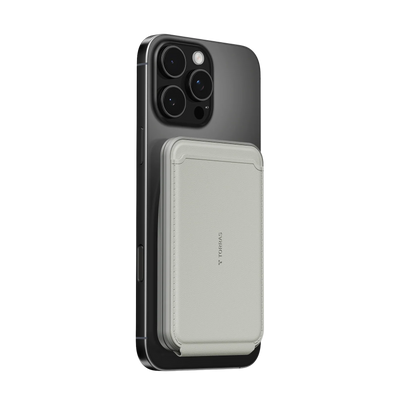


The iPhone 17 series is arguably Apple's most diverse lineup yet, with four distinct models each carving out a clear identity. From the surprisingly capable base iPhone 17 to the ultra-thin Air, all the way up to the Pro and Pro Max, there's a lot to unpack. Here's a structured breakdown of what sets each model apart, and where a good case fits into the picture.
What Every iPhone 17 Model Has in Common
Before diving into the differences, it's worth noting that Apple made some meaningful upgrades across the entire lineup this year.
All four models share a 120 Hz ProMotion display with 3,000 nits of peak outdoor brightness, a significant step up from previous non-Pro models. The new 18 MP Center Stage front camera arrives on every model too, featuring a square sensor that adapts between portrait and landscape without flipping the phone, plus simultaneous front and rear video recording via Dual Capture. Precision dual-frequency GPS, previously a Pro-only feature, is now standard across the board, as is Ceramic Shield 2 front glass with three times better scratch resistance and an anti-reflective coating.
These are meaningful across-the-board improvements, particularly the ProMotion display, which has been one of the most requested upgrades for the base model for years.

How the Four Models Differ
The similarities end fairly quickly once you look beneath the surface.
Build and Cooling
The Pro and Pro Max use an aluminum unibody construction that enables a new vapor chamber cooling system, delivering approximately 40% higher sustained performance compared to the 16 Pro, along with Apple's largest iPhone battery to date. The base iPhone 17 uses a standard aluminum frame, while the Air stands apart with a titanium frame and the thinnest profile in the lineup. Both the Air and Pro models get a ceramic shield back for added drop resistance, which the base 17 does not have.
Performance and Battery
The base iPhone 17 runs the A19 chip with 8 GB of RAM. The Air, Pro, and Pro Max all carry the A19 Pro chip with 12 GB of RAM, though the Air's version has one fewer GPU core than the Pros. Battery life is a genuine highlight this year across every model, with the base 17 gaining 8 hours over its predecessor, and the Pro Max reaching 39 hours of video playback.
Camera System
This is where the lineup diverges most significantly. The Air has a single 48 MP lens with 2x optical zoom and no macro mode, Cinematic mode, or spatial photo support. The base iPhone 17 steps up with a dual 48 MP system including ultrawide. The Pro and Pro Max go further with a triple 48 MP setup, 4x optical zoom extendable to 8x, 4K 120fps video, ProRes RAW, Apple Log 2, and a studio-quality 4-mic array. For anyone who relies heavily on camera versatility, the Pro models are the clear choice.
Connectivity
The Air is the only model with Apple's in-house C1X modem, which is more power-efficient but does not support mmWave 5G. The iPhone 17 and both Pros use a Qualcomm modem with mmWave support. File transfer speeds also differ: the Air and base 17 have USB 2 speeds, while the Pro and Pro Max offer USB 3.
Protecting Your Investment: Why a Case Still Matters
Even with Ceramic Shield 2 on the front and the new ceramic shield back on select models, real-world drops remain a genuine risk. A case provides the layer of protection that glass and metal alone cannot.
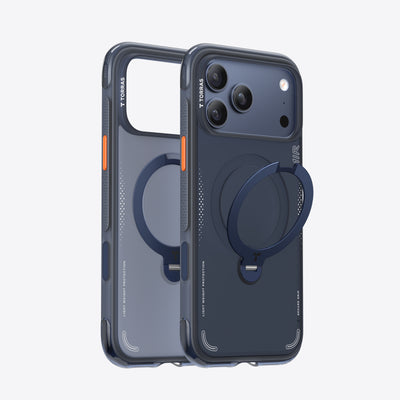
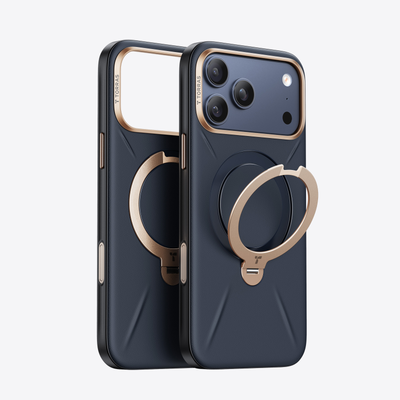
The TORRAS Ostand Q3 Air is a strong option for the iPhone 17 lineup. Its dot-matrix anti-slip side panels improve grip noticeably, reducing the chance of accidental drops. Visible airbag corners on all four sides add meaningful cushioning for the drops that do happen. The 360° magnetic stand on the back, rated for over 30,000 folds, works well for propping the phone up while eating, watching videos, or as a makeshift mount on metal surfaces when out and about. The side buttons are interchangeable, with a second color set included in the box. For those who prefer a softer feel, TORRAS also offers a nano-coated silicone version with a soft velvet interior, same stand and corner protection, different texture.

Should You Upgrade?
Coming from iPhone 16 (base model): Upgrading to the iPhone 17 is worth considering. The ProMotion display, improved battery life, and upgraded front camera are tangible day-to-day improvements.
Coming from iPhone 16 Pro: Probably not necessary for most people. The 16 Pro remains a capable device, unless the Air's slim form factor is specifically appealing.
Coming from iPhone 15 or older: This is where the upgrade makes the most sense. The jump in display quality, performance, battery life, and front camera is substantial, and if you're on a base 15 or earlier without Apple Intelligence, the action button, or camera control, the 17 series offers a compelling generational leap.
In Summary
The base iPhone 17 stands out as one of the most well-rounded base models Apple has made in years. The Air is a compelling option for anyone who values portability and a refined feel. The Pro and Pro Max remain the choice for power users and camera enthusiasts who want every capability Apple offers. Whichever model you choose, pairing it with a well-designed case from day one is the simplest way to keep it in good shape for the long run.

 New
New


Becca Farsace
Emmy-winning filmmaker and creator Becca Farsace takes tech outside. A former senior video producer at The Verge, she has created and produced over 250 videos, becoming the first staffer to surpass 6.5 million views on TikTok. Now a full-time tech creator, she's built a go-to YouTube channel for adventurous, real-world tech reviews. Becca blends cinematic storytelling with a sharp strategic lens to help brands and audiences connect with technology in a more human, compelling way.