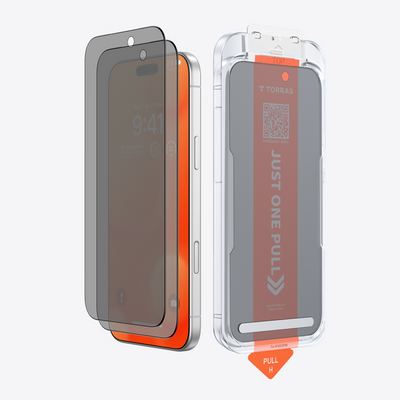
If reflections keep bothering you outside, go with an anti-glare screen protector. It spreads out bright light, so you'll see fewer harsh glare spots, but the image can look a little softer.
If you're only outside now and then and you care most about a crisp, vivid picture and a smooth glassy surface, pick clear. Just know that a clear finish reflects more light.
Neither finish removes glare completely. The real choice is which compromise you'd rather live with on your commute, your walk or your weekend outdoors.
How Anti-Glare and Clear Finishes Differ
The main difference is the surface. An anti-glare finish has a fine texture that scatters light. A clear finish is smooth and reflects light more like a mirror.

DNP is a Japanese film maker whose anti-glare film is used on displays such as smartphones and touch panels. DNP explains that this kind of film diffuses ambient light to reduce glare. 3M describes the same idea for its custom anti-glare filters, which are made for screens up to 24 inches, saying the filter diffuses light and helps reduce glare. Notice the wording: "reduce," not "eliminate." When the sun hits your screen directly, you can still see a bright haze. It's just spread out instead of showing up as one sharp reflection.
That texture has a downside. DNP notes that an ordinary uneven anti-glare surface may make the display look whitish or grainy. Blacks can look washed out, and you may see a slight sparkle against white backgrounds. DisplayNinja's guide to matte and glossy surface differences says matte screens can look somewhat fuzzy. It describes glossy screens as very reflective, but with a more vivid picture because they don't add graininess.
| Anti-glare (matte) | Clear (glossy) | |
|---|---|---|
| Reflected light | Spread out, so it's less harsh | Sharper, mirror-like reflections |
| Possible image effect | Softer image, whitish blacks, slight grain | More vivid, with no added grain |
| Surface character | Textured | Smooth |
These sources describe display surfaces and films in general. They aren't side-by-side tests of phone protectors, so results vary from one product to the next. Touch feel works the same way. Textured versus smooth tells you roughly what to expect under your finger, but it can't predict exactly how a particular protector will feel.
Which Finish Fits Your Outdoor Routine?
Start with the annoyance you notice most often. If you check transit times on a sunny platform every morning or read directions in a car mount, tilting the phone to dodge bright reflections gets old fast. For that daily routine, a slightly softer image is usually worth it, making anti-glare the better fit.
Now picture someone who mostly uses their phone indoors and steps outside for errands or a quick photo. For them, the occasional reflection is a smaller cost than a picture that looks a little hazy all day long. A clear finish generally tends to preserve standard contrast and color better without adding matte grain, though exact visual results vary by protector. You'll still get reflections in direct sun, and shading the screen with your hand helps.
Think about long-term use too. You'll look at your phone for months, in every kind of light, so pick the compromise you'll notice least on an ordinary day, not on the brightest afternoon of summer. The general research on finishes supports this way of choosing. It can't tell you exactly how one specific protector will perform outdoors.
Check the Finish and Phone Fit Before Buying
Before you add a protector to your cart, check two things in the listing:
- Find the stated finish. The listing should say "anti-glare," "matte" or "clear" in plain words. Don't guess from the product photos. Some listings also use the term anti-reflective, which works differently from matte. Our guide on anti-reflective vs. anti-glare explains how they differ. If touch feel matters a lot to you, look for product-specific surface details rather than relying on general matte or glossy descriptions.
- Find your exact phone model. Look for your specific model name in the compatibility list. A similar name, such as a Pro versus a Pro Max, doesn't mean the protector will fit. The screen size and the camera or sensor cutouts can be different.
If either detail is missing or unclear, ask the seller before you order.
FAQs
Will an anti-glare screen protector stop all glare in direct sun?
No. It spreads out reflected light to reduce glare, but in strong sunlight you can still see some brightness and haze on the screen.
Does an anti-glare protector make the screen look blurry?
It can. Textured anti-glare surfaces may soften the image or add slight grain, and how much depends on the product.
Is a clear protector bad for outdoor use?
Not necessarily. It reflects more light, but it keeps the image vivid. If you're only outside occasionally, it can be the better trade.

 New