

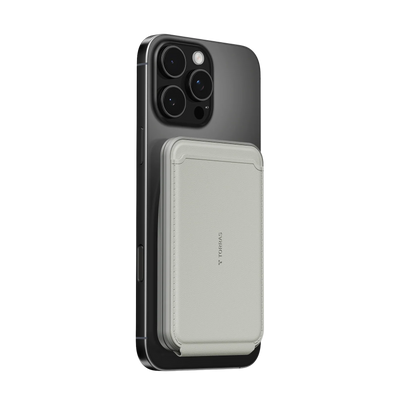


Most people own at least one of these and still are not totally sure what separates them. A power bank and a wireless charger both keep your phone charged, but they solve completely different problems. One travels with you. The other stays put. Knowing which one actually fits your life, or whether you need both, starts with knowing what each one is built to do.
Quick Comparison
Here is a side-by-side breakdown of how the two differ across the most common use cases.
|
Power Bank |
Wireless Charger |
|
|
Needs a wall outlet |
No |
Yes |
|
Works on the go |
Yes |
No |
|
Charges without a cable |
Optional (magnetic models) |
Yes |
|
Fast charging speed |
Up to 30W wired |
Up to 25W wireless |
|
Best for |
Travel, commutes, outdoor use |
Desk, nightstand, home |
|
Charges multiple devices |
Yes (via USB-C) |
Phone only (typically) |
|
Heat management |
Varies by model |
Active cooling available |
Both have real strengths. The right one depends on where you actually run out of battery.

What Makes a Power Bank the Right Choice
A power bank is a portable battery pack that stores electrical energy so you can charge your phone anywhere without a wall outlet. It is the solution for situations where plugging in is not an option. Knowing when it earns its place in your bag comes down to two core strengths.
Portability and the No-Outlet Advantage
The defining feature of a power bank is independence from the power grid. Long commutes, flights, hiking trails, full-day events, and travel all create stretches where outlets are unavailable or inconvenient. A power bank with 10,000 mAh, where mAh stands for milliampere-hours and measures how much charge the battery can store, can fully recharge most modern smartphones two to two and a half times on a single fill.
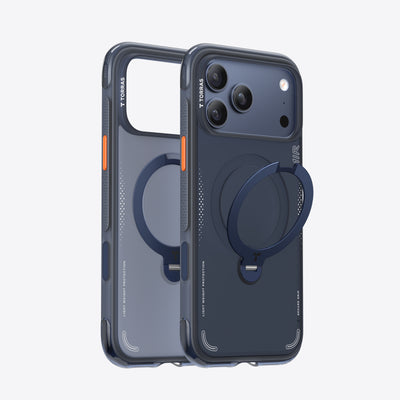
Magnetic power banks add another layer of convenience by snapping directly to the back of compatible phones. This means the phone charges hands-free while you use it, without a cable running between two devices sitting awkwardly on a table.
Wired Output Speed and Multi-Device Use
Most power banks include a USB-C port that supports fast charging protocols like PD, which stands for Power Delivery, a standard that allows the charger and device to negotiate the fastest safe charging speed. A 30W wired output can deliver a meaningful charge in a short window, which matters when you have 20 minutes before leaving the house.
Power banks also charge multiple device types. Phones, tablets, wireless earbuds, and even laptops can all pull from the same power bank through a wired connection, making it a flexible backup for anyone carrying more than one device.

Where a Wireless Charger Fits Better
A wireless charger, also called an inductive charger, transfers power from a charging pad to your phone without a cable by using electromagnetic induction. It requires a wall outlet to work and is designed for stationary use rather than on-the-go charging. Its strengths show up in different contexts than a power bank.
Desk and Nightstand Convenience
For people who spend predictable time in one place, a wireless charger removes the friction of plugging and unplugging a cable multiple times a day. Setting your phone on a pad at your desk or nightstand and picking it up fully charged requires no thought and no cable management.
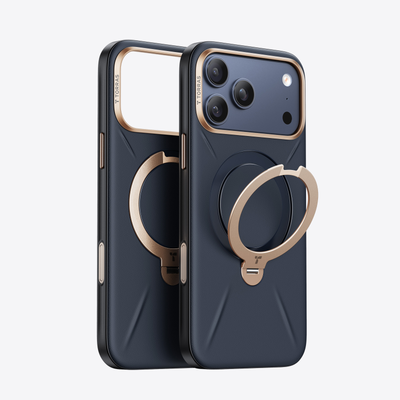
A wireless charger with a built-in stand and a 360° rotating arm goes further. It keeps your phone upright at a comfortable viewing angle while charging, which is useful during video calls, streaming, or following a recipe without needing to pick the phone up.
Cable-Free Charging and Heat Management
Wireless chargers eliminate port wear over time since the phone never needs a cable inserted. For people who charge frequently throughout the day, this reduces long-term physical strain on the USB-C port.
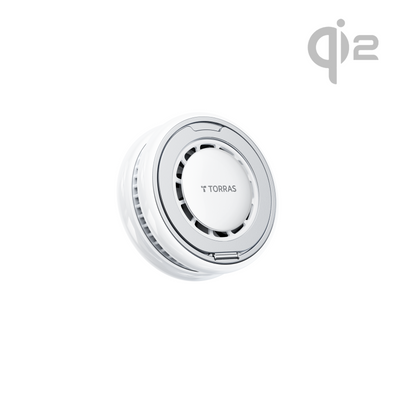
Wireless chargers with active cooling technology manage the heat that wireless charging naturally generates. Inductive charging converts a portion of energy into heat as a byproduct of the process. A charger with a built-in fan or thermoelectric cooling, which refers to a system that actively draws heat away from the charging surface, keeps the phone at a stable temperature during extended sessions. This matters most during overnight charging or long desk sessions where the phone stays on the pad for hours.

How to Decide Which Setup Fits Your Life
The right choice depends on how and where your phone runs low. A few scenarios point clearly to one option over another:
- You run out of battery away from outlets. A power bank is the primary solution. Capacity and wired output speed are the specs to prioritize.
- Your phone dies at your desk or overnight. A wireless charger fits better. Look for one with a stand and active cooling for long sessions.
- You want both portability and cable-free convenience. A power bank with wireless charging covers both without carrying two separate devices.
- You charge multiple devices including a laptop. A standalone power bank with high-wattage USB-C output is more versatile than a wireless-only solution.
Most people's charging problems fall into one of these categories. Matching the right tool to the right scenario is more effective than buying the most feature-packed option available.
How a Power Bank and a Wireless Charger Work Together
For many people, the answer is not one or the other. It is both, used in the right place at the right time. A power bank handles everything that happens away from an outlet. A wireless charger handles everything that happens at a fixed spot.
The practical split looks like this. During a commute, a long travel day, or any stretch without reliable outlet access, a slim magnetic power bank snaps to the back of the phone and delivers a charge without cables. It fits in a pocket, works while you move, and recharges via USB-C overnight. Back at a desk or nightstand, a wireless charger with a built-in stand takes over. The phone sits upright at a comfortable angle, charges at full speed, and stays cool through an active fan cooling system that manages the heat wireless charging naturally generates.
For the on-the-go side, look for a magnetic power bank that delivers both wired and wireless output, stays under 200g, and snaps securely to compatible iPhones without needing a separate cable between the phone and the bank. For the stationary side, a Qi2 wireless charger, where Qi2 refers to the magnetic wireless charging standard developed by the Wireless Power Consortium, with a rotating stand and active cooling covers desk and nightstand use without adding heat or cable clutter to your surface.

The Right Charger Is the One That Fits Where You Are
A power bank and a wireless charger are not competing products. They solve different problems at different times of day. Get clear on where your battery dies most often and build your setup from there. If it is on the move, a power bank is the answer. If it is at a desk or nightstand, a wireless charger earns its place. And if it is both, you now know exactly what each one brings to the table. Find the setup that matches your routine and stop working around a dead battery.
FAQs
Q1. Can a Power Bank Replace a Wireless Charger for Everyday Home Use?
A power bank can technically charge your phone at home, but it is not the most practical replacement for a wireless charger in that setting. Wireless chargers are designed for stationary, convenient charging and do not deplete a stored battery the way a power bank does. For home use, a wireless charger is more efficient since it draws from the wall rather than requiring you to recharge the power bank itself afterward.
Q2. Is a MagSafe Power Bank Basically the Same as a Wireless Charger?
They share the same wireless charging technology but serve different purposes. A MagSafe-compatible wireless charger requires a wall outlet and is designed for stationary use. A magnetic power bank stores its own charge and works without any outlet, making it portable. The charging mechanism is similar, but the use case is fundamentally different.
Q3. Which Is Better for Travel: a Power Bank or a Compact Wireless Charger?
A power bank is more practical for travel because it works without access to an outlet. Compact wireless chargers still require a wall plug, which limits their usefulness in transit, on planes, or during outdoor activities. A power bank with wireless charging capability offers the best of both by providing portability and cable-free charging in a single device.
Q4. How Many Times Can a 10,000 mAh Power Bank Charge a Phone?
A 10,000 mAh power bank can typically recharge a modern smartphone two to two and a half times, depending on the phone's battery size and how much charge is drawn during each session. In practice, factors like wireless versus wired output and whether the phone is in active use during charging affect the total number of charges. For most people, 10,000 mAh covers a full day or a weekend trip without needing to recharge the power bank itself.

 New
New


Becca Farsace
Emmy-winning filmmaker and creator Becca Farsace takes tech outside. A former senior video producer at The Verge, she has created and produced over 250 videos, becoming the first staffer to surpass 6.5 million views on TikTok. Now a full-time tech creator, she's built a go-to YouTube channel for adventurous, real-world tech reviews. Becca blends cinematic storytelling with a sharp strategic lens to help brands and audiences connect with technology in a more human, compelling way.