

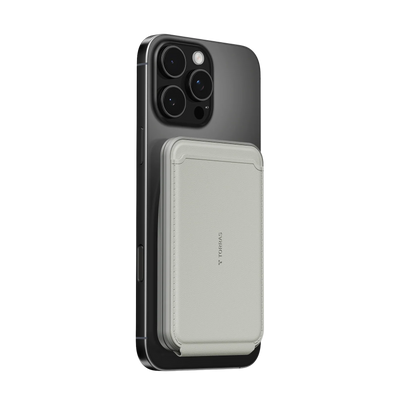


Within days of the iPhone 17 Pro's release, social media was flooded with user photos showing scratches, chips, and dents on brand-new devices. News outlets quickly dubbed the phenomenon "scratchgate." This isn't the first time Apple has faced this kind of backlash, but this time, there's a deeper story rooted in material science and design decisions worth understanding.

Why Is the iPhone 17 Pro So Susceptible to Damage?
To make sense of this, it helps to look at how Apple's choice of materials has evolved over the past decade.
The Inherent Limits of Aluminum
Aluminum is a staple of consumer electronics: lightweight, affordable, and easy to manufacture. But it comes with two significant drawbacks: it's relatively soft, and it's vulnerable to impact. Apple typically addresses this through anodization, a process that forms a hardened outer layer roughly 15 microns thick, about one-tenth the thickness of a human hair. This coating resists light surface scratches, but offers limited protection against scuffs, dents, and chips.
Stepping Back from Titanium
Starting with iPhone X in 2017, Apple moved to stainless steel frames on Pro models, then upgraded to titanium with the iPhone 15 Pro in 2023, a material nearly as hard as steel but almost half the weight. iPhone 17 Pro breaks that trajectory, returning to aluminum for the first time in nine years.
Apple's stated rationale is that aluminum conducts heat 20 times more efficiently than titanium, improving thermal performance. That's technically accurate, but the primary driver of the 17 Pro's thermal gains appears to be its new vapor chamber cooling system. Testing data shows the 17 Pro Max runs approximately 23% cooler under load than the 16 Pro Max, a figure that aligns closely with established vapor chamber benchmarks across the industry.
The Most Vulnerable Point: The Aluminum Camera Bump
At the heart of the iPhone 17 Pro's durability concerns is its aluminum camera bump, a first in iPhone history.
- The bump's perimeter features a sharp anodized aluminum edge, which is prone to what engineers call the "edge effect": anodized coatings cannot adhere uniformly to sharp corners, making those edges prone to crumbling and chipping;
- The camera bump is nearly twice the size of the previous generation's, significantly increasing the surface area exposed to contact with other objects;
- When the phone is set face-up on a flat surface, the entire weight of the device rests on that camera bump, making it the first point of contact with any surface.
This means that even the simple act of setting the phone down on a desk can leave marks along the bump's edges over time.
A Protective Case: Not Optional, But Essential
Given the material characteristics of the iPhone 17 Pro, a genuinely protective case is no longer a nice-to-have. It's a practical necessity for preserving the device's condition.
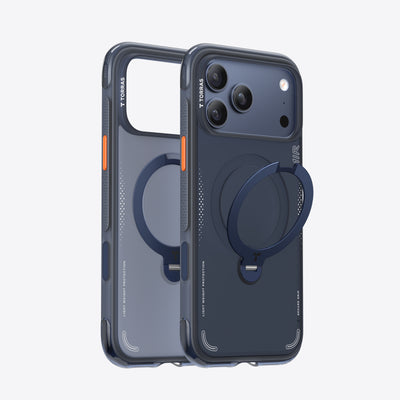
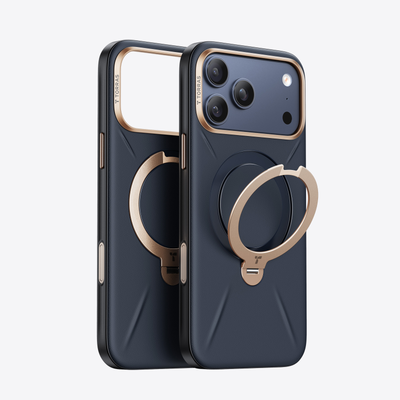
The TORRAS Ostand Q3 Air is built with exactly this in mind:
- Full-coverage airbag protection: Airbag cushioning at all four corners absorbs the impact of the most common drop scenarios, providing coverage across high-risk areas including the camera bump;
- Anti-slip grip design: Textured grip panels on both sides reduce the likelihood of accidental drops, addressing the risk before it becomes a problem;
- 360° rotating stand: The integrated stand supports both portrait and landscape orientations, ideal for hands-free video calls, watching content, or capturing spontaneous photos without the awkward arm stretch;
- Slim profile: Full protection without the bulk, preserving the natural feel of the iPhone 17 Pro in hand.

Screen Protection Is Part of the Picture Too
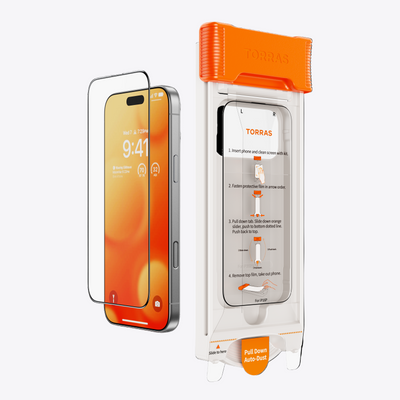
Beyond the frame and camera bump, the display deserves equal attention. The TORRAS screen protector kit includes a dedicated applicator tool that takes the guesswork out of installation:
- Place the phone into the alignment frame;
- Secure the protective film;
- Pull the tab and run the roller down and back up to set the film.
No repeated repositioning, minimal air bubbles, and a noticeably reduced screen glare, making it easier to use the phone outdoors without squinting.
In Summary
The iPhone 17 Pro is a capable flagship with genuine strengths in performance and design. But the combination of an aluminum frame and a sharp-edged aluminum camera bump creates a measurably higher risk of cosmetic damage under everyday use. This isn't a matter of being careless; it's a reflection of the material's physical properties.
A well-designed protective case is the most straightforward way to keep the iPhone 17 Pro looking its best. The TORRAS Ostand Q3 Air strikes a practical balance between meaningful protection and everyday usability, a combination that makes a real difference with a phone like this.

 New
New


Becca Farsace
Emmy-winning filmmaker and creator Becca Farsace takes tech outside. A former senior video producer at The Verge, she has created and produced over 250 videos, becoming the first staffer to surpass 6.5 million views on TikTok. Now a full-time tech creator, she's built a go-to YouTube channel for adventurous, real-world tech reviews. Becca blends cinematic storytelling with a sharp strategic lens to help brands and audiences connect with technology in a more human, compelling way.