What is a Privacy Screen Protector?

What is a Privacy Screen Protector?

In this article

Visual hacking remains a serious risk in 2026, with studies showing that strangers can capture sensitive information from phones in public spaces in over 90% of attempts. A privacy screen protector solves this by narrowing the viewing angle so only you see the display straight on, while delivering far better clarity than the dim, rainbow-prone filters of the past.

A person using a smartphone in a crowded public environment. The phone screen is visible to the user but appears completely black from a side angle, demonstrating the privacy filter effect.

The Hidden Threat: Why Visual Privacy Matters in 2026

When you check your banking app or read a confidential email on the morning train, the person standing behind you can often see everything. According to a global experiment conducted by the Ponemon Institute and 3M, visual hacking attempts succeed in 91% of cases in public and office environments, often within minutes.

Commuters on crowded subways and professionals working in airports or cafes face the highest exposure. One quick glance over your shoulder is enough for someone to note a password, glimpse a corporate document, or photograph a private message. For anyone handling personal finances, work credentials, or sensitive client data, this creates real risk of identity theft or data breaches.

A privacy screen protector acts as an immediate defensive layer. It physically limits who can view your screen without requiring you to constantly angle the phone or hunch over it. In everyday commuting scenarios, this protection lets you use your device more naturally instead of shielding it with your hand or body.

How Micro-Louver Technology Works (And Why It Used to Be Blurry)

Privacy screen protectors rely on micro-louver or nanolouver technology — essentially microscopic vertical blinds embedded in the glass or film. These louvers allow light to pass straight through at a zero-degree angle directly in front of the screen. As soon as someone views from approximately 30 degrees to the side, the light is blocked and the screen appears black.

This Kensington privacy screen overview explains that the standard cutoff is roughly 30 degrees on either side, creating an effective blackout for shoulder surfers while preserving full clarity for the primary user.

Older versions of this technology often created noticeable drawbacks on high-resolution OLED displays like those in the iPhone 16 and Samsung Galaxy S series. The louvers could interfere with the subpixel layout, producing moiré patterns — those shifting rainbow or screen-door effects that made colors look distorted and text less sharp.

Modern nanolouver designs solve this by precisely aligning with OLED pixel grids. As detailed in Samsung's UL Solutions verification, this alignment prevents visual artifacts while maintaining the privacy cutoff. The result feels like using a normal high-clarity screen protector until someone tries to look from the side.

In practice, this means you can comfortably read messages in a busy café without the constant worry of the person next to you seeing your conversation. The filter works in both bright and dim environments, though you may need to adjust brightness slightly depending on ambient light.

The 2026 Standard: High-Transmittance (HT) and OLED Clarity

Older privacy filters often felt like wearing sunglasses indoors. Many legacy models transmitted only about 60% of visible light, forcing users to max out brightness and accept a noticeably dimmer, less vibrant display. That trade-off is no longer necessary.

Premium privacy protectors in 2026 use High-Transmittance (HT) technology to reach 85-90% visible light transmittance. This 3M Bright Screen technical data sheet shows how advanced engineering directs light more efficiently through the louvers instead of simply darkening the entire panel. The difference is especially noticeable on bright, high-DPI OLED screens where every percentage point of clarity improves readability and color accuracy.

2026 Privacy Screen Fit by Transmittance, Privacy Angle, and Artifacts

A tiered comparison of legacy and high-transmittance privacy screens. The chart highlights the clarity jump from older low-transmittance filters to modern high-transmittance options while keeping privacy cutoff and moiré risk in view.

View chart data
Scenario Legacy 60% VLT Standard Premium HT 85-90% VLT
Privacy Angle 1.0 2.0 3.0
Display Artifacts 2.0 2.0 1.0

Higher transmittance does not weaken the privacy effect. The 30-degree blackout remains consistent because the engineering focuses on axial light efficiency rather than simply reducing overall darkness. For OLED phones, this also eliminates the moiré patterns that once made privacy glass frustrating to use daily.

If you regularly use your phone in varied lighting — from dark subway cars to bright airport lounges — the 2026 HT standard makes privacy protection feel like a seamless upgrade rather than a compromise.

A close-up of a tempered glass privacy screen protector with micro-louver technology, showing light rays being restricted to a narrow viewing angle. The protector is transparent from the front but darkens significantly at an angle.

Pros and Cons: Balancing Security with Daily Usability

The biggest advantage is simple peace of mind. On a packed morning commute, you can open your banking app or reply to sensitive messages without constantly twisting your body to block the view. The 9H tempered glass layer also delivers strong impact protection, so the screen stays safe from drops and scratches in addition to visual threats.

Battery impact is the most common practical concern. Because the filter absorbs some light, many people increase screen brightness by 10-20% for comfortable viewing. This can shorten battery life slightly depending on how much time you spend at higher brightness levels, though the effect is usually manageable with modern phone batteries and adaptive brightness features.

Most privacy screens deliver their strongest effect in portrait orientation. In landscape mode the blackout is less complete, which matters if you frequently watch videos or share the screen with someone sitting beside you. The filter can also make the screen appear slightly darker from extreme angles even for you, though high-transmittance versions minimize this.

Overall, the real-world experience feels secure without major daily friction for most users who need protection in public spaces. The tempered glass version adds meaningful drop resistance that a basic film cannot match.

For those curious about general screen protection options, our guide on whether your iPhone needs a screen protector explores the broader choices available.

Face ID and Fingerprint Sensor Compatibility: What You Need to Know

Modern privacy protectors are designed to work with Face ID on recent iPhones, but alignment and thickness matter. The nanolouver layer must not interfere with the TrueDepth camera array. High-quality versions maintain reliable face recognition even in lower light, though very thick or poorly fitted protectors can occasionally cause issues.

Samsung users with ultrasonic fingerprint sensors face a stricter requirement. The sensor relies on sound waves traveling through the glass, so the protector needs an ultra-thin adhesive layer and perfect acoustic seal. Thicker films or air gaps can reduce success rates, sometimes requiring you to press slightly harder or reposition your finger.

In daily use, a well-engineered privacy screen rarely causes repeated failures once properly installed. If you notice inconsistent biometric performance after applying the protector, checking the edge seal and reapplying with the included alignment tool often resolves it. For best results with ultrasonic sensors, look for protectors specifically labeled as compatible with the latest Galaxy models.

Our article on how to remove and reinstall a screen protector cleanly offers practical tips if you need to adjust fit.

Privacy Screen Protector vs. Tempered Glass: Which Is Right for You?

Standard tempered glass prioritizes maximum clarity and impact resistance. It feels invisible on the display and offers excellent 9H hardness against scratches and drops, making it the default choice for users who primarily want physical protection without added features.

A privacy screen protector adds the micro-louver layer for visual security. If you regularly use your phone in public — whether on public transit, in coffee shops, or while traveling — the added protection against shoulder surfing often outweighs the minor adjustments in brightness or viewing habits. The best options combine both: strong tempered glass with privacy filtering.

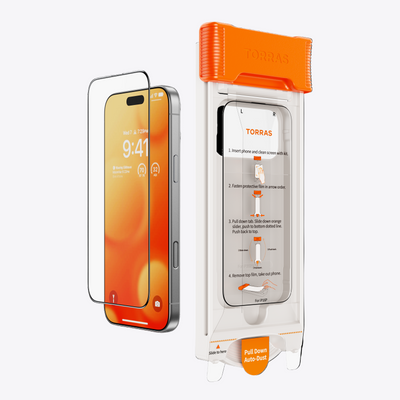
TORRAS GlassGo Privacy Screen Protector for iPhone 16 Series delivers 25-degree privacy while maintaining high clarity and full compatibility with cases and MagSafe accessories. Similar options exist for the iPhone 17 lineup and popular Samsung models.

If physical durability without privacy is your main goal, explore our ultra-clear tempered protectors for iPhone. For broader device compatibility, the full screen protector collection includes options for both privacy and standard protection across iPhone and Samsung devices.

Choosing depends on your typical environment. Frequent public use with sensitive information tilts the decision toward privacy glass. Purely home or office use with less exposure usually favors standard tempered glass for its slightly higher baseline clarity and simpler installation.

What Is the Difference Between a Privacy Screen Protector and Regular Tempered Glass?

Privacy versions add the micro-louver layer that regular tempered glass lacks. This creates the side-view blackout while regular glass remains fully visible from any angle. Both offer 9H hardness, but privacy glass typically requires slightly more care during installation to maintain edge sealing for optimal sensor performance.

Do Privacy Screen Protectors Work With Face ID and Fingerprint Sensors?

Yes, when properly designed. High-quality nanolouver protectors maintain Face ID reliability on iPhones. For ultrasonic fingerprint readers on Samsung phones, ultra-thin adhesive versions perform best. Occasional recalibration or precise installation may be needed, but consistent failures usually indicate a thickness or fit issue rather than the privacy technology itself.

How Much Does a Privacy Screen Protector Dim the Display?

Modern high-transmittance models reduce brightness by only 10-15% compared to no protector, which is rarely noticeable in normal use. Older 60% VLT versions felt significantly dimmer and often required maximum brightness settings. Current premium options avoid this problem for most lighting conditions.

Will a Privacy Screen Protector Affect My Phone's Touch Response?

No. Quality tempered glass privacy protectors preserve the original touch sensitivity and response time. The glass surface maintains the same smooth glide and accuracy as your bare screen or a standard protector. Any perceived change usually stems from improper installation rather than the privacy layer.

Are Privacy Screen Protectors Worth It for Everyday Commuters?

For anyone who uses their phone on public transport or in crowded spaces, the protection against visual hacking delivers genuine daily value. The combination of strong impact resistance and effective privacy at a 25-30 degree angle makes them a practical upgrade over basic tempered glass for security-conscious users.

How Do I Clean a Privacy Screen Protector Without Damaging It?

Use a soft microfiber cloth with a small amount of isopropyl alcohol or dedicated screen cleaner. Avoid abrasive materials or excessive pressure that could scratch the louver layer. Our guide on removing air bubbles and maintaining screen protectors includes detailed cleaning steps that apply equally to privacy versions.

TORRAS Bot

The TORRAS Pebble Power Bank offers a balanced combination of portability, design quality, and dependable charging performance. Its unique pebble-inspired shape distinguishes it from traditional power banks while improving everyday usability.

Leave a comment

All comments are moderated before being published.