



Expensive 2026 flagship phones carry repair bills that can top $400 when the display shatters. A well-chosen screen protector serves as the first line of defense, absorbing impact so the actual screen stays intact. Tempered glass outperforms basic plastic film in most real-world drops, but only when the glass is engineered for today's ultrasonic sensors, curved edges, and daily pocket carry.

The Physics of Protection: Why Tempered Glass is a Sacrificial Layer
Drop your phone and the protector takes the hit. Tempered glass is designed to fracture in a controlled way, dissipating the kinetic energy that would otherwise crack the phone's display. Think of it like the crumple zone in a car: the protector sacrifices itself to protect the far more expensive component underneath.
This is why many users see their screen protector shatter while the phone screen remains perfect. A $30-$50 protector has done its job. Replacing the display on an iPhone 17 Pro Max or Galaxy S26 Ultra is far more painful. The physics is simple: glass absorbs and redirects force through micro-fractures rather than letting that energy transfer straight to the OLED panel.
In everyday scenarios this matters most during pocket carry or one-handed use on crowded commutes. A film protector might stop scratches but offers almost no energy absorption when the phone lands face-down on concrete or tile.
Tempered Glass vs. Plastic Film: The 2026 Performance Gap
Plastic film, usually PET or TPU, primarily guards against scratches. It bends and flexes with the phone, which feels reassuring in a tight pocket, yet it cannot absorb serious impact the way tempered glass does. After a few months many films develop an orange-peel texture that dulls the display and creates drag during swipes.
Tempered glass delivers a surface that feels almost identical to the naked phone. Swipes on a gaming-heavy iPhone 17 Pro Max stay fast and precise because there is no soft drag. Clarity stays high too. Premium glass transmits 92-99% of light while most films sit around 88-90% and begin to yellow from UV exposure after repeated outdoor use.
Long-term wear shows the gap clearly. A plastic film often peels at the edges after six months of car-mount vibration and daily in-and-out of pockets. Glass stays put when installed correctly and maintains its smooth feel even after a year of heavy use. For anyone who commutes, games, or simply wants the phone to feel premium, the difference is noticeable within the first week.
The Truth Behind "9H Hardness" and Scratch Resistance
The 9H rating you see on every package refers to the pencil hardness scale (ASTM D3363), not the Mohs mineral scale. It means the surface resists scratches from a 9H pencil lead. On the Mohs scale, most tempered glass sits between 5.5 and 6.5, which means quartz sand and many beach minerals can still leave marks (Android Police explains the common misunderstanding).
What matters more than raw surface hardness is flexural strength. Soda-lime glass is rigid and brittle. When the phone body flexes slightly in a pocket or during a drop, the glass can fail from the inside out. Aluminosilicate glass, the material used in premium protectors, undergoes ion-exchange strengthening. Larger potassium ions replace smaller sodium ions, creating a deep compression layer that resists cracks even when the surface is scratched.
This is why some protectors survive repeated drops while others spiderweb from a single incident. The real-world test is not how hard the surface is but how well the material handles the phone's natural flex. For parents, construction workers, or anyone who travels frequently, checking for aluminosilicate construction gives far more confidence than chasing the highest 9H number.
Will Tempered Glass Interfere with My 2026 Ultrasonic Fingerprint Sensor?
Ultrasonic fingerprint sensors send sound waves through the glass and listen for the reflected signal. Thick glass or any air gap scatters those waves and causes failed reads or lag. The reliable limit for most 2026 flagships is tempered glass no thicker than 0.33 mm combined with a full-surface, high-viscosity adhesive that leaves zero bubbles.
Ultrasonic Fingerprint Sensor Compatibility by Glass Thickness
Safe compatibility drops sharply as tempered glass gets thicker. Under 0.33 mm is the clearest safe zone; air gaps reduce reliability, and full adhesive bonding is the preferred setup.
View chart data
| Category | Lower bound | Upper bound |
|---|---|---|
| 0.10-0.20 mm | 90.0 | 100.0 |
| 0.20-0.33 mm | 80.0 | 95.0 |
| 0.33-0.50 mm | 45.0 | 70.0 |
| 0.50-0.70 mm | 20.0 | 40.0 |
| 0.70+ mm | 5.0 | 15.0 |
This chart shows the compatibility boundary for 2026 ultrasonic fingerprint sensors: tempered glass is safest below 0.33 mm, while thicker glass moves quickly into a risk zone. Air gaps lower reliability further, so full adhesive bonding is the preferred setup. As Samsung's own guidance confirms, the right combination of thin glass and bubble-free adhesive keeps the sensor responsive for daily unlocking.
Generic thick protectors often create the very frustration people hope to avoid. If your phone suddenly stops recognizing your print after installation, thickness or trapped air is usually the cause. Precision-engineered glass avoids that problem from the start.

Why Do Some Protectors Chip at the Edges After Two Weeks?
Edge chipping is the top reason people replace protectors early. Most budget glass is cut, given a basic 2.5D grind, and packaged. Microscopic stress risers remain along the perimeter. Everyday pressure from pockets, bags, or even sliding the phone across a desk concentrates force at those weak points and creates chips within days or weeks.
Premium protectors go through a secondary polishing step that smooths and strengthens those edges. The result feels noticeably more comfortable in the hand and resists chipping far longer during one-handed use or when clipped into a car mount. Curved 2.5D or 3D edges also sit flush with most cases, reducing the lip that catches on surfaces.
If your last protector chipped at the corners after light use, the manufacturing process was likely the real culprit rather than bad luck. Looking for reinforced, polished edges removes much of that frustration.
Beyond Standard Glass: How GlassGo Engineering Redefines Durability
Standard tempered glass improved on plastic film, yet it still carried limitations around edge strength, installation bubbles, and fingerprint oil buildup during long gaming sessions. TORRAS GlassGo uses chemically strengthened aluminosilicate that undergoes ion-exchange to create a deep compression layer, delivering better impact resistance than ordinary soda-lime glass (ScienceDirect overview of the material science).
The InstaFit installation system removes the guesswork that leads to air gaps and sensor problems. A high-viscosity adhesive spreads evenly and cures without bubbles, keeping ultrasonic fingerprint readers on 2026 iPhones and Galaxy devices working reliably. The Tora-Silk coating resists fingerprints and provides an extremely low-friction surface that feels natural for rapid swipes during mobile gaming or one-handed scrolling on crowded transit.
Real use shows the difference quickly. The protector stays clear after months of outdoor exposure, edges resist chipping even when the phone is dropped repeatedly, and touch response stays crisp. For anyone replacing a scratched or peeling plastic film that has dulled their display, moving to properly engineered glass feels like getting the original screen quality back.
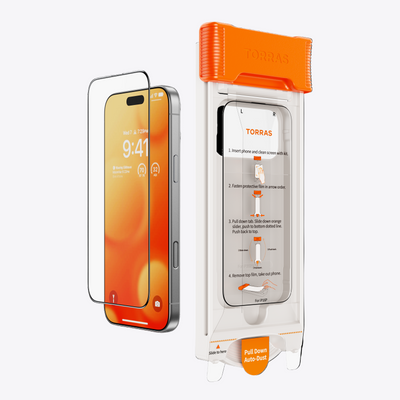
Our GlassGo Screen Protector for iPhone 17 Series and GlassGo Screen Protector for Samsung S26 Series are built exactly for these 2026 flagships. They match the ultrasonic thickness requirements, feature reinforced edges, and include the Tora-Silk finish that serious users notice immediately.
Do Screen Protectors Prevent Cracks?
Many people wonder whether adding a protector actually lowers the chance of a cracked display. In practice, a quality tempered glass layer does exactly that by absorbing the majority of impact energy. It cannot make the phone invincible, but it turns many potential screen repairs into simple protector swaps. Our guide on whether screen protectors prevent cracks breaks down the physics and real drop-test patterns users experience.
Are All Screen Protectors the Same?
Not even close. Thickness, edge treatment, adhesive quality, and coating all change how the protector performs after the first few weeks. A basic PET film and a precision-engineered aluminosilicate glass protector may look similar in the package but behave completely differently in your pocket or during a drop. See our deeper comparison of materials in Are All Screen Protectors the Same? for the details that affect daily use.
Best Screen Protector for iPhone 17 Pro Max
For the iPhone 17 Pro Max, the priority is thin glass that works with the ultrasonic sensor, reinforced edges that resist chipping in a case, and a coating that stays clean during extended gaming or navigation use. The GlassGo version built for that exact model meets all three requirements without adding noticeable bulk or changing the phone's original feel.
FAQs
Does 9H Hardness Mean the Protector Is Scratch-Proof?
No. 9H refers only to pencil-lead resistance on a specific test scale. Quartz sand and many everyday minerals can still scratch the surface. Focus on the glass material and edge treatment instead of the hardness number alone.
Can I Use Any Tempered Glass With Ultrasonic Fingerprint Sensors?
Only protectors engineered to stay under 0.33 mm with full-surface adhesive. Thicker glass or trapped air usually causes failed reads or lag. Always confirm the product is listed for your specific 2026 model.
How Long Should a Good Tempered Glass Protector Last?
With normal daily use and a quality case, six to twelve months is typical before edge wear or surface oil buildup becomes noticeable. Reinforced edges and anti-fingerprint coatings extend that window significantly.
Is Tempered Glass Worth the Extra Cost Over Plastic Film?
For anyone carrying a $1,200+ phone, yes. The improved clarity, touch feel, impact absorption, and longevity quickly outweigh the price difference, especially when you factor in fewer replacements and better resale value.
What Should I Do If My Fingerprint Sensor Stops Working After Installation?
Remove the protector and check for thickness or bubbles. Reinstall using the alignment tray if provided, or choose a protector specifically rated for ultrasonic sensors on your model. Most compatibility issues trace back to these two factors.

 New
New


Becca Farsace
Emmy-winning filmmaker and creator Becca Farsace takes tech outside. A former senior video producer at The Verge, she has created and produced over 250 videos, becoming the first staffer to surpass 6.5 million views on TikTok. Now a full-time tech creator, she's built a go-to YouTube channel for adventurous, real-world tech reviews. Becca blends cinematic storytelling with a sharp strategic lens to help brands and audiences connect with technology in a more human, compelling way.