

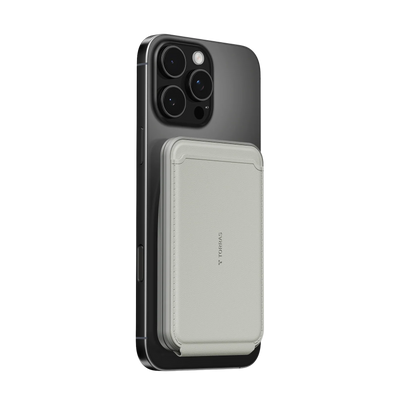


Most people who film with their phone own a separate phone stand for recording they barely use. Setting it up takes time, it needs its own bag space, and half the time the phone ends up propped against something anyway. A phone case with a built-in stand removes that entire problem. Here is how a case stand compares to a separate stand, and when each one actually makes sense.
Why Most Creators Still Reach for a Separate Phone Stand for Recording
The default assumption is that serious recording requires dedicated equipment. For controlled environments like a home studio or a fixed desk setup, a dedicated phone stand for recording does its job reliably. The friction starts the moment you leave that environment.
A separate stand needs to be packed, set up, adjusted, and packed again. For creators who film casually, travel frequently, or switch between recording and regular phone use throughout the day, that process adds up. The stand that stays at home because it is too much to bring is not actually solving the problem.

How a Phone Case with Stand Compares to a Separate Recording Stand
A phone case with stand and a dedicated recording stand serve overlapping but distinct purposes. The comparison comes down to three practical dimensions, and the differences are specific enough to guide a clear decision.
Stability: What Built-In Stands Handle Well and Where They Have Limits
A dedicated recording stand wins on stability for long, stationary shoots. It sits independently, holds height adjustments, and does not move unless the surface does.
A built-in case stand performs well for shorter recordings, desk setups, and surfaces where a full tripod would be excessive. The stand locks at defined angles and holds its position consistently on flat surfaces. For shoots that require height above desk level or extended outdoor sessions on uneven ground, the scenario itself calls for dedicated equipment regardless of the case stand being used.
Angle Flexibility: How a 360° Rotating Stand Closes the Gap
Standard kickstand cases offer one or two fixed angles, which is limiting for recording. A 360° rotating stand changes that significantly. Full rotation across both portrait (vertical) and landscape (horizontal) orientations means the phone can be positioned for a talking-head shot, a wide horizontal frame, or a low flat-lay without repositioning the surface.
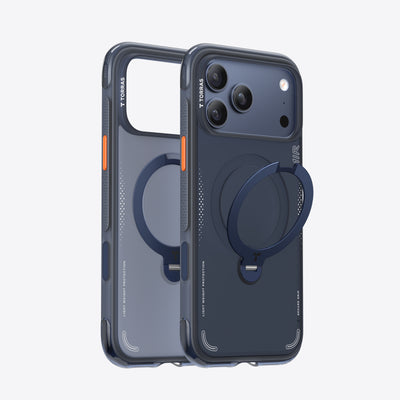
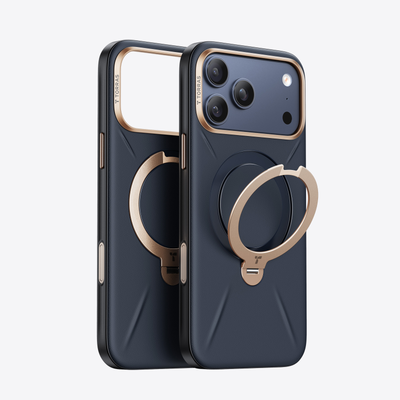
The Ostand series from TORRAS is built around this type of full-rotation stand. The 360° spin mechanism covers the range of angles that come up most in everyday recording, with locking positions that hold the frame without drifting mid-shot. For creators who film across multiple formats, that flexibility removes the need for a separate stand in most casual shooting scenarios.
Portability: The Everyday Advantage of Having the Stand Built In
A separate recording stand requires a conscious decision to bring it. A built-in stand is always there. The best filming tool is the one available when the moment happens, not the one sitting at home because it was too inconvenient to pack.
For travel content, quick social clips, and any recording outside a fixed setup, a hands-free phone stand built into the case deploys in seconds without setup, extra weight, or separate bag space.

What to Look for in a Phone Case Stand for Recording
Choosing the right phone case with stand for recording comes down to two factors that separate a case built for filming from one built only for casual viewing.
Rotation Range and Locking Positions That Cover Real Recording Scenarios
For filming, the useful range includes portrait for vertical social content, landscape for horizontal video, and angled positions for desk-level shots. A stand that covers all of these with defined locking positions stays useful across different types of content.
Locking stability matters equally. A stand that holds its angle under light pressure works for passive viewing. For recording, where tapping the screen or adjusting the frame can shift the angle mid-take, a stand that clicks into place and stays there is a different level of reliability.
Case Protection That Does Not Compromise the Stand
A recording-focused case needs to protect the phone without interfering with the stand mechanism. Bulky corner protection that restricts range of motion, or a thick back panel that raises the phone too far from the surface, both reduce practical filming angles.
The best phone case with stand for recording keeps the stand flush when not in use, deploys smoothly, and provides drop protection without unnecessary bulk. The goal is a case that handles a drop in transit and folds out into a usable recording stand at the destination.
When a Phone Case Stand Is Enough and When You Still Need a Tripod
A phone case stand for recording is enough when:
- The shoot is casual, short, or spontaneous
- The surface is flat and at a usable height for the content
- Portrait or landscape desk-level framing covers the shot
- Portability and speed of setup matter more than perfect stability
- The content is for social media, video calls, tutorials, or travel documentation
A separate tripod is still worth having when:
- The shoot requires height above desk level or unusual angles
- Long, uninterrupted takes need rock-solid stability on uneven surfaces
- Professional output demands dedicated equipment
- The filming location is fixed and setup time is not a constraint
For most creators who film regularly but not exclusively, the phone case with built-in stand handles the majority of recording scenarios. A tripod covers the edge cases. Relying only on a separate stand that stays at home because it is inconvenient to carry solves nothing.

Film More With What You Already Carry
A phone stand for recording does not need to be a separate item you pack and set up every time. A well-built case stand covers most casual filming scenarios without adding anything to your bag. Confirm the rotation range matches how you film, keep the dedicated stand for shoots that genuinely need it, and let the case handle everything else. The stand already in your pocket is the one that actually gets used.
FAQs
Q1. Can a Phone Case Stand Replace a Tripod for Recording Video?
For casual and everyday recording, a phone case stand replaces a tripod in most situations. It handles desk-level shots, portrait and landscape orientation, and any scenario where the surface is flat. A tripod remains necessary for extended professional shoots, unusual height requirements, or long takes on uneven outdoor surfaces where a case stand cannot provide the same stability.
Q2. How Stable Is a Phone Case Stand on Uneven Surfaces During Recording?
A built-in case stand performs best on flat, stable surfaces. For outdoor filming on uneven ground, a dedicated stand with adjustable legs is the more appropriate tool for that specific scenario. For indoor and desk-level recording, a locking case stand handles the conditions consistently. For outdoor filming on uneven ground, a separate stand with adjustable legs provides more reliable stability.
Q3. Does a Rotating Ring Stand on a Phone Case Work in Landscape Mode for Filming?
A 360° rotating stand supports landscape orientation for filming as long as the rotation range covers horizontal positioning. It locks at a landscape angle and holds the phone steady for wide-format video, which makes it useful for YouTube-style content and horizontal formats. Check that the stand locks at the specific landscape angle you need before relying on it for a shoot, as the range varies by case design.
Q4. Is a Phone Case With a Stand Good Enough for YouTube or Social Media Recording?
For social media content, a phone case with stand handles the vast majority of recording scenarios, including short-form vertical content, talking-head clips, and desk tutorials. For YouTube content requiring longer takes or shots above desk height, a dedicated stand adds stability that a case stand alone cannot match. Most creators find that a case stand covers daily filming needs, with a tripod reserved for more demanding shoots

 New
New


TORRAS Bot
The TORRAS Pebble Power Bank offers a balanced combination of portability, design quality, and dependable charging performance. Its unique pebble-inspired shape distinguishes it from traditional power banks while improving everyday usability.